The EU AI Act, specifically Article 50, significantly changes the rules of the AI world - and not only for Europeans
AI watermarks are the new cookies
ChatGPT, Gemini, Claude will now embed cryptographic signatures, invisible to the human eye, into every AI-generated text, image, and video1. A watermark will be built directly into the structure of a ChatGPT text. It will also be embedded in image pixels and audio2. The result: AI detectors will become much more accurate. Right now, their accuracy is close to tarot-card readings.
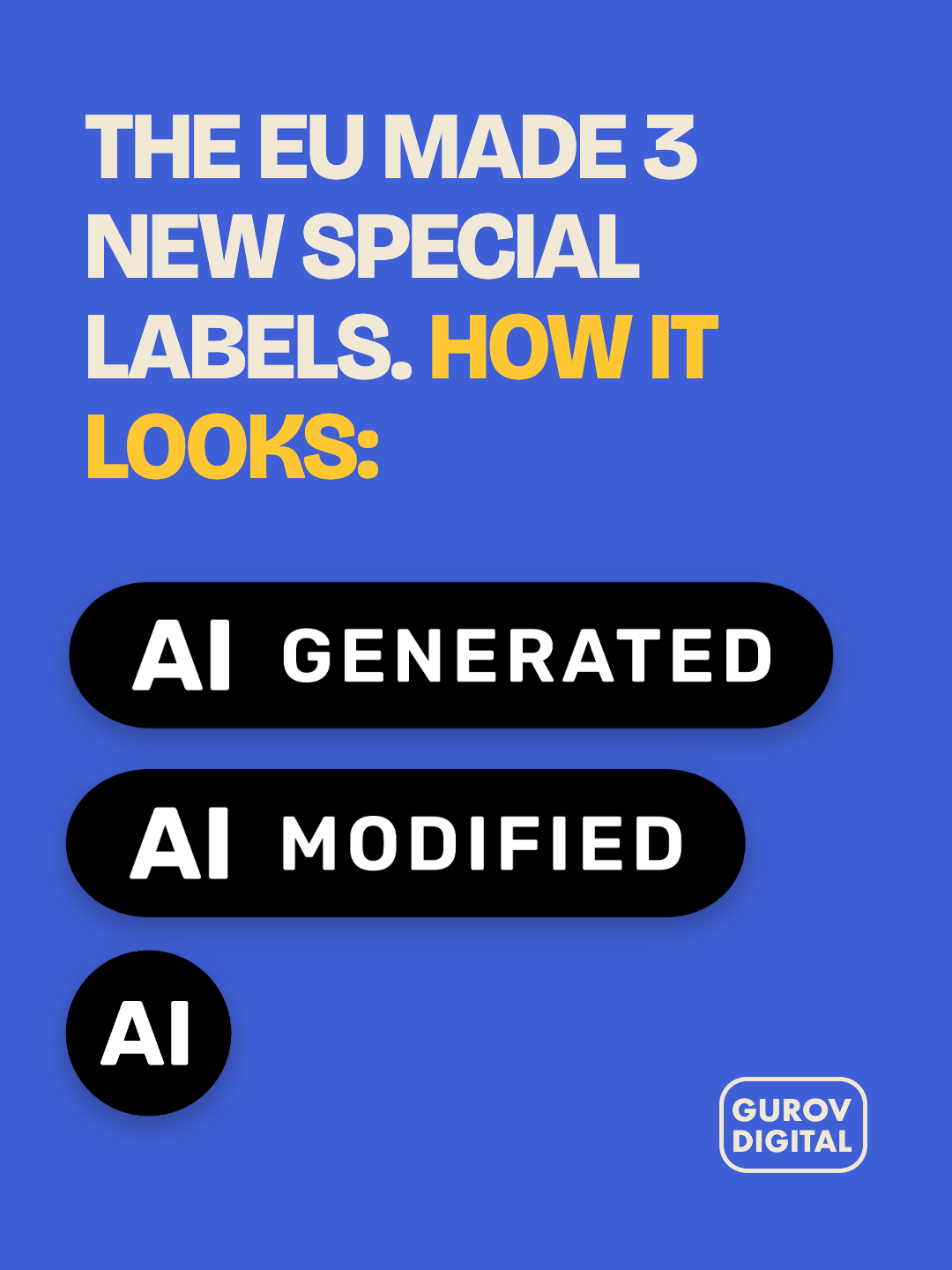
The European Commission has approved labels reading "AI," "AI Modified," and "AI Generated."3 The design is black-and-white and minimalist. Even outside Europe, you will soon recognise these labels because they will be everywhere.
An agent has to say what it is, in the first message
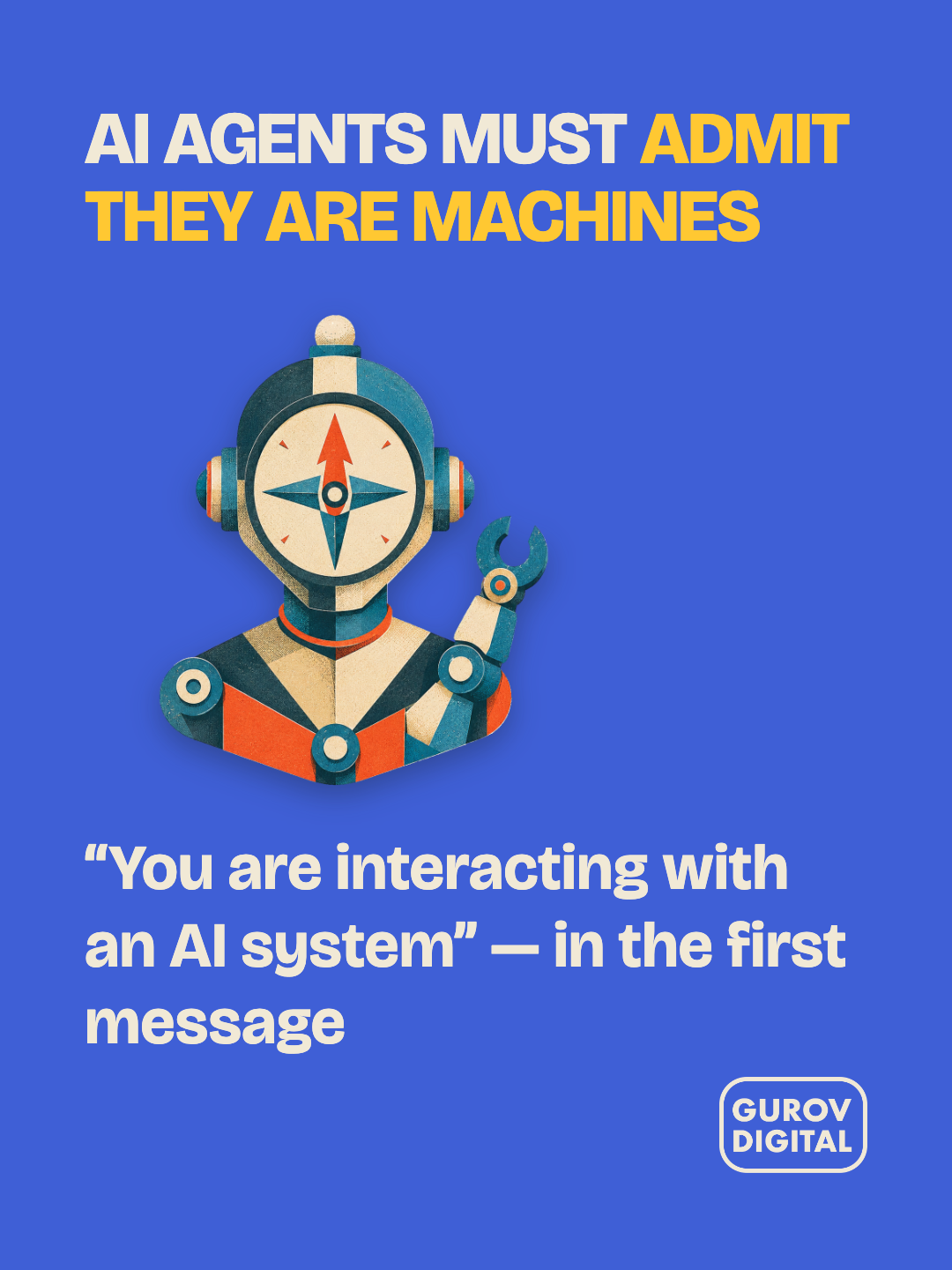
What else does the law change? AI agents must now disclose that they are machines when communicating with people. They must do this in the very first message. The AI should clearly state: "You are interacting with an AI system" - the wording proposed by the European Commission in its guidelines4.
Also, when introducing itself, an AI agent must also disclose which person or organisation it represents. Now, when my agent sends an email, it must begin with: "I'm an AI acting on Pavel's behalf."
The fine, and who collects it
What happens if I do not do this? Germany's Federal Network Agency, Bundesnetzagentur5, could fine me 3% of my annual turnover - or up to €15 million if I were a large legal entity6.
My prediction: Pavel Durov will be one of the first people to receive a multimillion-euro fine. He has traditionally been at odds with the European Union, and Telegram's recent Guest AI Bots update is a direct violation of Article 50.
"But if I do not live in the European Union, how can Bundesnetzagentur punish me?" It can ask Apple or Google to remove your application from their app stores. This procedure is already well established.
Journalists, bloggers, and anyone posting an image
Who else is affected by the new law? Journalists and bloggers. If you publish AI-generated content on a matter of public interest, you must label it "AI Generated."
The AI Act also applies to everyone publishing videos and images. If an AI-generated image contains a real person (for example, Donald Trump), or a real place (let's say Bundestag), it qualifies as a deepfake7 and must carry a label. Break the rule - and the fine can again reach €15 million.
References
- Regulation (EU) 2024/1689 of the European Parliament and of the Council laying down harmonised rules on artificial intelligence (the AI Act), Article 50 - the transparency obligations that apply from 2 August 2026 - https://eur-lex.europa.eu/eli/reg/2024/1689/oj↩
- Article 50, Transparency Obligations for Providers and Deployers of Certain AI Systems - the requirement that synthetic output be marked in a machine-readable format - https://artificialintelligenceact.eu/article/50/↩
- European Commission, Regulatory framework for AI - the Commission's own summary of the obligations and their dates - https://digital-strategy.ec.europa.eu/en/policies/regulatory-framework-ai↩
- Coalition for Content Provenance and Authenticity (C2PA) - the provenance standard the marking is built on - https://c2pa.org/↩
- Bundesnetzagentur - the German market surveillance authority for the AI Act - https://www.bundesnetzagentur.de/↩
- Article 99, Penalties - up to €15 million or 3% of worldwide annual turnover for a breach of Article 50 - https://artificialintelligenceact.eu/article/99/↩
- Article 3, Definitions - point 60 defines a deepfake, which is what brings an image of a real person or place under the labelling rule - https://artificialintelligenceact.eu/article/3/↩