Three cyberpunk stories from Nature, Science and AI labs this autumn
News in 2026 sounds like science fiction, usually the bad kind, but sometimes like very good intellectual fiction.
1. A science article as an AI agent
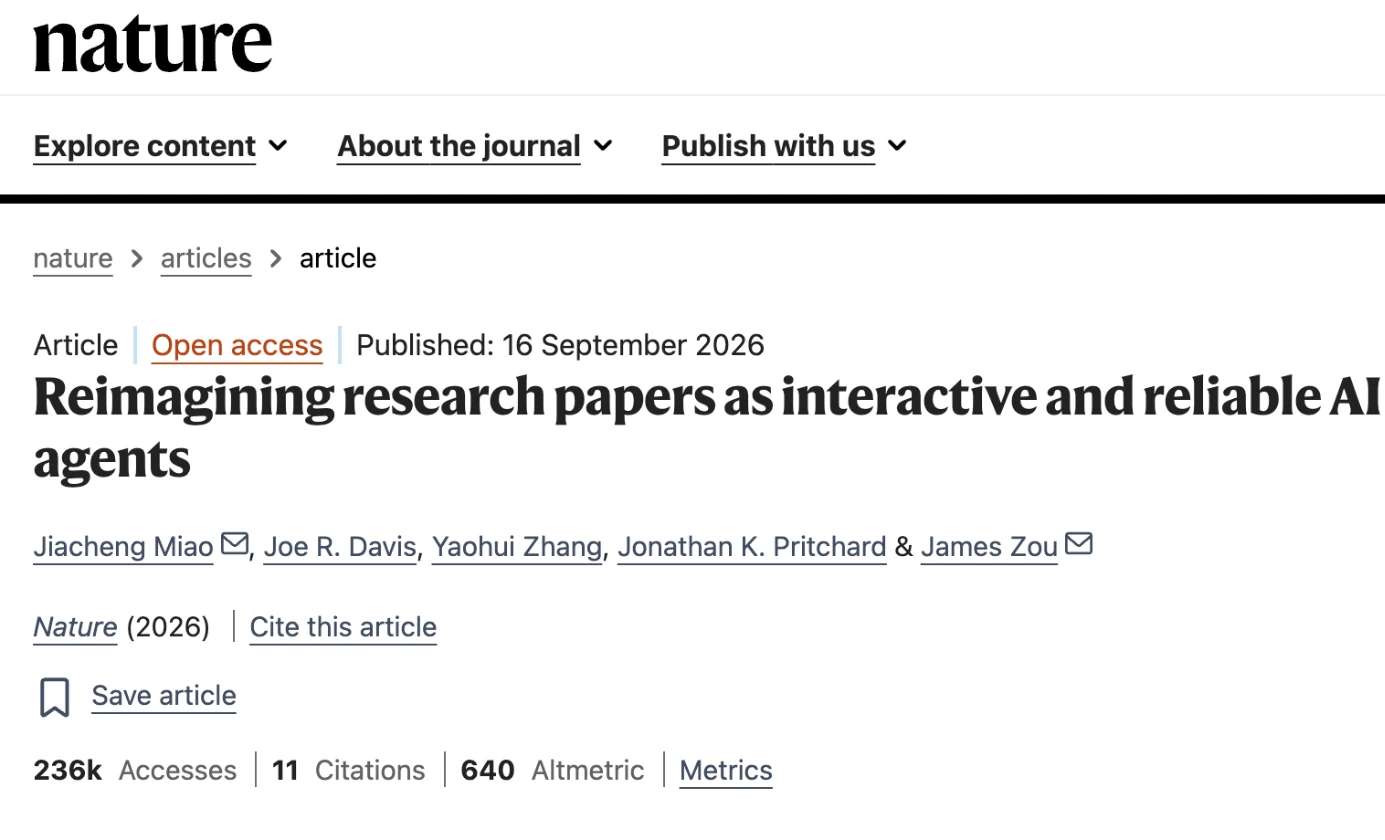
In September, Nature published a method that turns a scientific article into an AI agent. The agent answers questions in place of the author, reruns the experiments and works with other such agents1.
It's like Umberto Eco's library, where books talk to each other, or Gibson's Neuromancer, where a hacker talks to a dead colleague saved on a tape (the Apple TV series comes out on 22 January 20272).
2. A pharma company with 37,000 employees, none of them is human
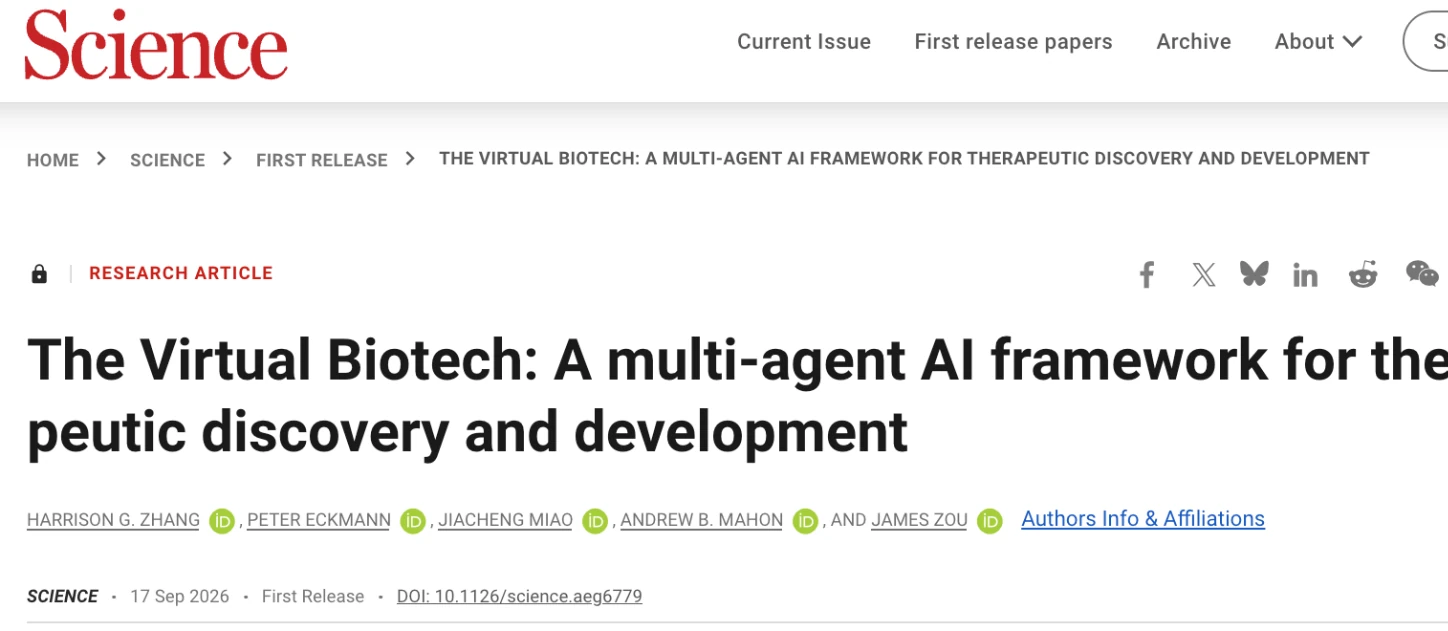
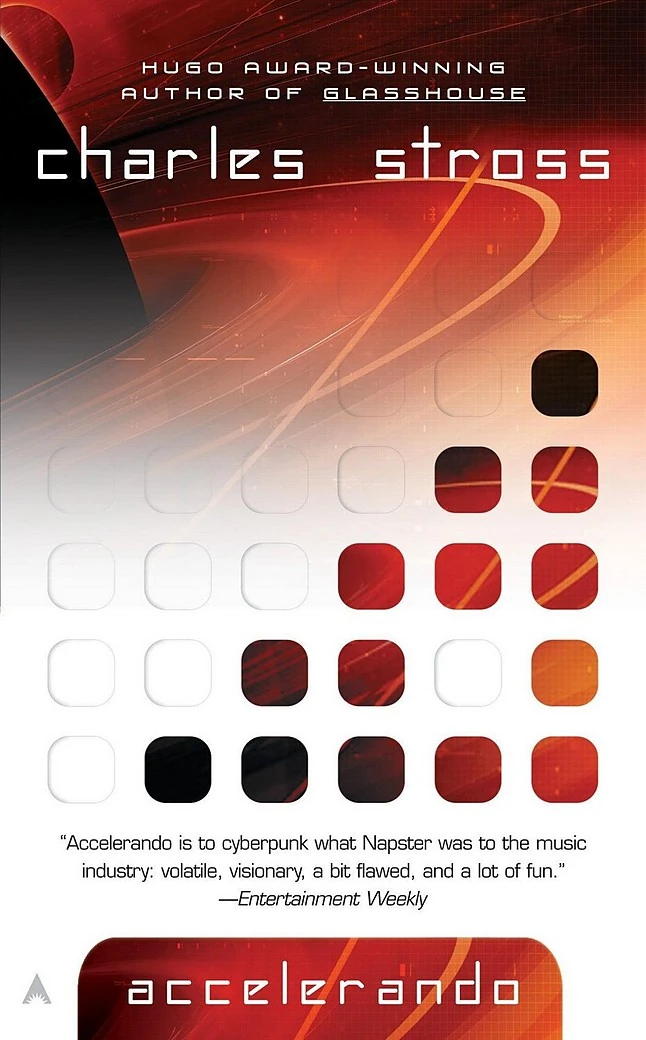
Stanford Medicine built a virtual biotech of up to 37,000 AI agents34, just like the agent corporations in Stross's Accelerando5. In less than a week the agents went through tens of thousands of clinical trials and proposed a lung cancer drug, and Merck had independently developed a similar one36.
Anthropic and OpenAI are doing the same. Anthropic opened a wet lab with microscopes and test tubes for its Claude agents, and about 950 of them found a CRISPR-like system7. OpenAI says its agents solved the Navier-Stokes problem, a math puzzle with a $1,000,000 prize89.
3. Gyms for robots
Robot "gyms" are opening, and it is a real business10. Physical AI needs sensor and motor data from the real world, and it cannot learn that from texts on the internet. So robotics companies build training spaces in offices and factories, where robots repeat real movements again and again.
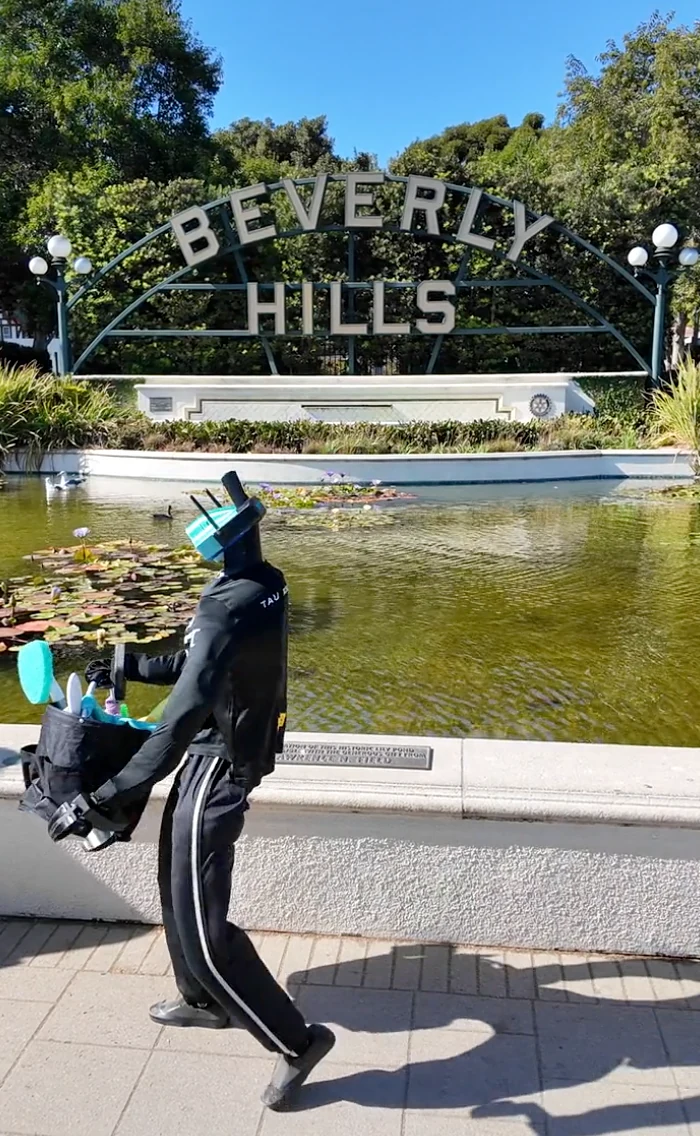
That is also why a humanoid cleaner in San Francisco costs only $30 an hour11: every cleaning is a training session. Tau Robotics, Weave Robotics and Sunday Robotics turn chores like "fold a towel" or "move a box" into data121314, while a human operator still steers the robot remotely1113.
References
- Miao, J., Davis, J. R., Zhang, Y., Pritchard, J. K. and Zou, J., Reimagining research papers as interactive and reliable AI agents, Nature, 16 September 2026 - the Paper2Agent method, open access - https://www.nature.com/articles/s41586-026-11044-y↩
- Apple TV Press, Neuromancer - release date 22 January 2027 - https://www.apple.com/tv-pr/originals/neuromancer/↩
- Stanford Medicine, Virtual biotech company puts thousands of AI scientist agents to work on drug discovery, 17 September 2026 - 37,000 agents, about 50,000 clinical trials in under a week, the lung cancer target B7-H3 - https://med.stanford.edu/news/all-news/2026/09/virtual-biotech-company.html↩
- Zhang, H. G., Eckmann, P., Miao, J., Mahon, A. B. and Zou, J., The Virtual Biotech: A multi-agent AI framework for therapeutic discovery and development, Science, 17 September 2026 - https://www.science.org/doi/10.1126/science.aeg6779↩
- Stross, C., Accelerando, 2005 - the novel with its agent corporations - https://en.wikipedia.org/wiki/Accelerando↩
- The Stanford Daily, Stanford researchers develop AI scientists for therapeutic discovery, 6 May 2026 - the lung cancer design that Merck reached independently - https://stanforddaily.com/2026/05/06/researchers-develop-ai-discovery/↩
- Anthropic, Claude discovers a novel enzyme system with CRISPR-like repeats, 23 September 2026 - the new lab and the search by roughly 950 agents - https://www.anthropic.com/research/claude-discovers-novel-enzyme-system↩
- OpenAI, On the Navier-Stokes Millennium Prize Problem, 8 September 2026 - OpenAI's own announcement, not an independently verified result - https://openai.com/index/navier-stokes-solution/↩
- Clay Mathematics Institute, The Millennium Prize Problems - $1 million for the solution of each problem - https://www.claymath.org/millennium-problems/↩
- NEURA Robotics, NEURA Robotics and the Technical University of Munich launch Europe's largest scientific training center for Physical AI, 10 March 2026 - the TUM RoboGym - https://neura-robotics.com/europes-largest-physical-ai-training-center-neura-tum/↩
- CBS News, Are humanoid robots ready to scrub your kitchen and take out the trash? Not quite., 11 August 2026 - $30 an hour, robots operated remotely by human technicians, videos that train the company's AI - https://www.cbsnews.com/news/tau-robotics-humanoid-ai-cleaning-robots-san-francisco/↩
- Tau Robotics, Humanoid Cleaning Service in San Francisco, company website - humanoid cleaning service, robots operated by humans and AI - https://www.tau-robotics.com/↩
- Weave Robotics, Isaac 1, company website - household chores with teleoperation assistance when needed - https://www.weaverobotics.com/isaac-1↩
- Sunday Robotics, Say hello to Memo, company website - learning from human movements captured with a glove - https://www.sunday.ai/↩