Three claims I keep returning to, because each one is more load-bearing than it first appears.
One — "artificial intelligence" is not a scientific term
It is a commercial one. The problem is the second word.
In 1997 fifty-two researchers signed a consensus statement on intelligence, published in Intelligence and led by Linda Gottfredson of the University of Delaware. It defines intelligence as a very general mental capability that, among other things, involves the ability to reason, plan, solve problems, think abstractly, comprehend complex ideas, learn quickly and learn from experience. It is not merely book learning, a narrow academic skill, or test-taking smarts; it reflects a broader and deeper capability for comprehending our surroundings.
Hold current systems against that list honestly and the fit is partial. Some capabilities are demonstrated, others are contested, and at least one is not present at all in a deployed model: learning from experience in the ordinary sense, as opposed to being retrained. Weights are frozen. What looks like learning inside a conversation is context, not acquisition.
None of which makes the systems less useful. It makes the label imprecise. Something closer to "algorithmic modelling" would describe what is actually happening. It also does not sell, which is most of the answer to why nobody uses it.
Two — the hardest word in English for a language model is "it"
Pronouns are the difficult case, and the reason is that they carry almost no meaning of their own. They point. Resolving one requires holding the surrounding situation in mind and deciding what is being pointed at.
This is why pronoun resolution became a benchmark and not a footnote. Terry Winograd's original example is the canonical one: the city councilmen refused the demonstrators a permit because they feared violence, versus because they advocated violence. One word changes, and the referent of "they" flips. No amount of syntax gets you there. You need a model of who fears things and who advocates things.
Hector Levesque proposed the Winograd Schema Challenge in 2011 as an alternative to the Turing test, precisely because it resists the tricks that let a system pass by deflection. Machines performed near chance for years. Systems now score well above that, which is a real result — though later analysis showed some of the gain came from statistical regularities in the datasets, not from the reasoning the benchmark was designed to isolate.
Three — Google built it first and shelved it
LaMDA was Google's conversational model, announced in 2021 and never released as a public product. The capability was there. The judgement about what it was worth was not.
Google had reason for caution. A chatbot that says something indefensible is a reputational problem for a company whose product is trust in search results, and the same conservatism had already cost them elsewhere. What followed is now the standard case study: OpenAI shipped ChatGPT in November 2022, built on the transformer architecture that Google researchers had published in 2017, and the market reorganised itself around a category Google had reached first and chosen not to enter.
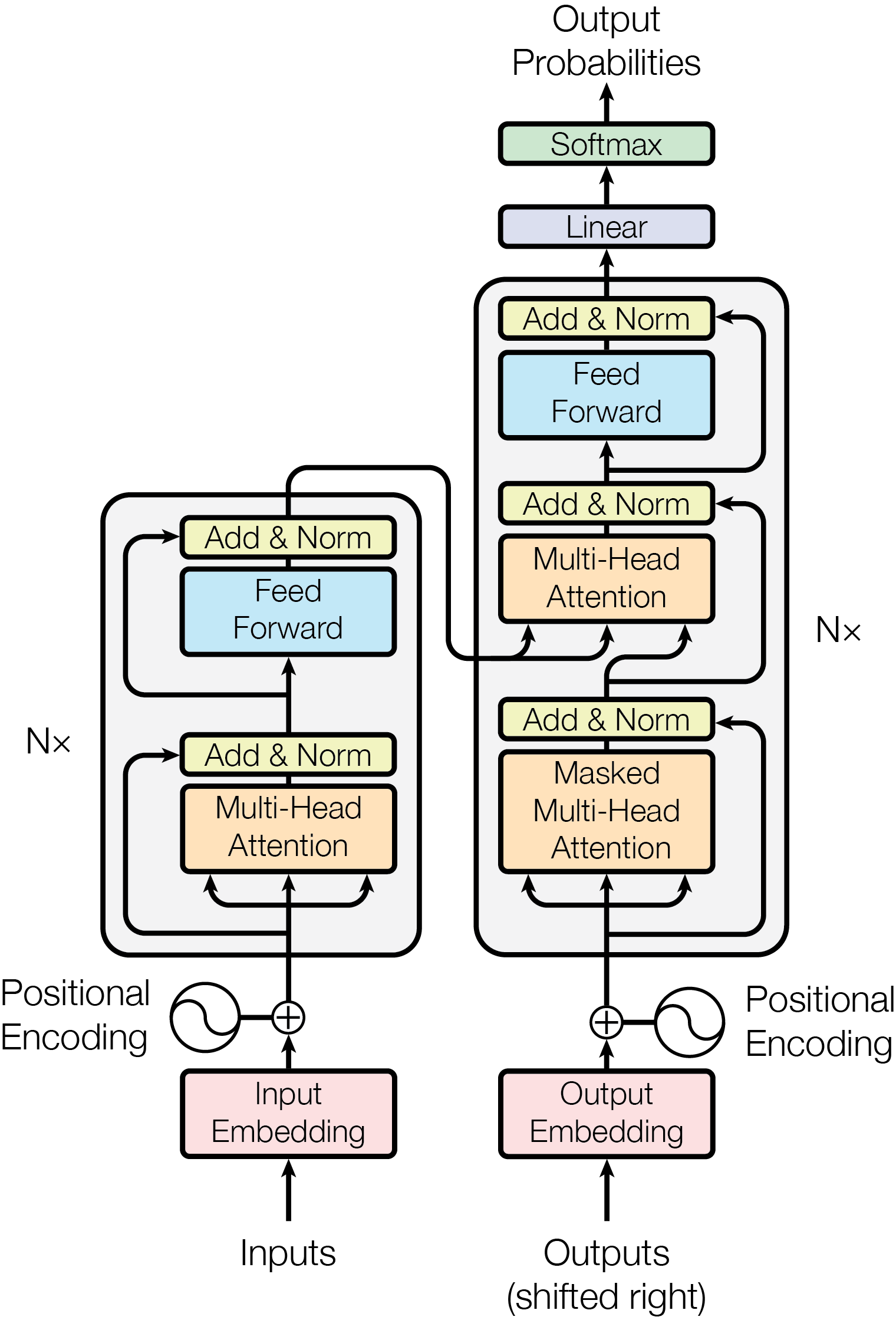
The transferable lesson is not about models. It is that the risk of shipping is legible and the risk of not shipping is invisible until someone else makes it visible.
References
- Gottfredson, L. S., Mainstream Science on Intelligence: An Editorial with 52 Signatories, History, and Bibliography, Intelligence 24(1), 13–23 (1997) — https://doi.org/10.1016/S0160-2896(97)90011-8
- Levesque, H. J., Davis, E., Morgenstern, L., The Winograd Schema Challenge, Proceedings of KR-2012 — https://cdn.aaai.org/ocs/4492/4492-21843-1-PB.pdf
- Trichelair, P., Emami, A., Cheung, J. C. K., Trischler, A., Suleman, K., Diaz, F., How Reasonable are Common-Sense Reasoning Tasks: A Case-Study on the Winograd Schema Challenge and SWAG (arXiv:1811.01778, 2018) — on dataset artefacts in Winograd-style benchmarks — https://arxiv.org/abs/1811.01778
- Vaswani, A. et al., Attention Is All You Need (arXiv:1706.03762, 2017) — the transformer architecture, published by Google — https://arxiv.org/abs/1706.03762
- Thoppilan, R. et al., LaMDA: Language Models for Dialog Applications (arXiv:2201.08239, 2022) — https://arxiv.org/abs/2201.08239